

September 2026
Event details







Event Description
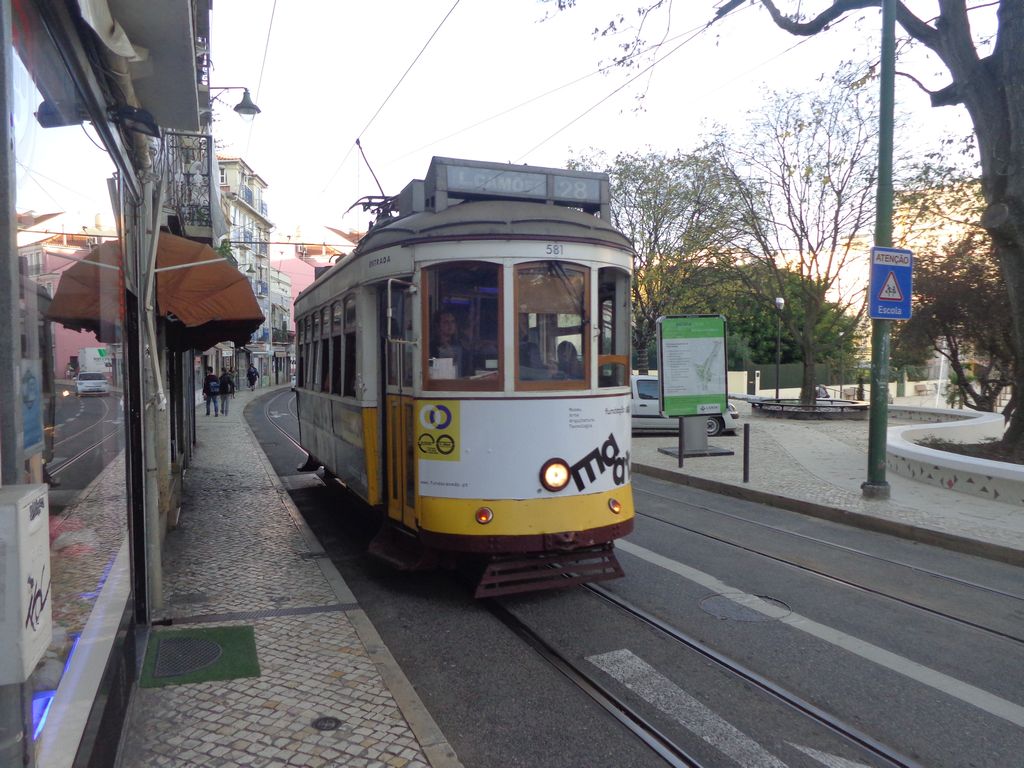
In this event we'll get to know the route of the mythical Tram 28, where we'll take the opportunity to take a look at some of Lisbon's curiosities, visit some monuments and take in the viewpoints and gardens through which the 28 winds, from Largo Martim Moniz to the Prazeres Cemetery.
Viúva Lamego Ceramics Factory
Since 1849, Viúva Lamego has been creating unique pieces using artisanal methods that beautify the world. Initially Viúva Lamego, whose manufacturing facilities were located in the building where its shop is today in Largo do Intendente in Lisbon, produced utilitarian items (carvings, etc.) in red clay and faience and tiles in white clay.
At the beginning of the 20th century, tiles became more and more important and production in red clay came to an end. In the 1930s, Viúva Lamego began to collaborate closely with visual artists, who increasingly used tiles in their installations to express their creations.
The masters at Viúva Lamego continue to manufacture a wide range of hand-painted tiles, create special works based on the creations of authors and develop new products that perpetuate the integration of tiles into architecture.
Church and Crypt of St Anthony
The church was rebuilt in 1767, according to a design by Mateus Vicente de Oliveira, on roughly the same site as the original church, which was destroyed by the earthquake. A National Monument, it is a late Baroque building with sinuous lines marked by the design of the pediment and staircase. With a longitudinal Latin cross plan, it has a single nave, covered by a barrel vault, making abundant use of marble. The church's contents include: the canvases by Pedro Alexandrino de Carvalho, located in the transept; the neo-medieval railings by the architect Vasco Regaleira, imitating the famous railings of the Lisbon Cathedral; the tile programme in the sacristy, from the second half of the 18th century; the image of St Anthony recovered from the original temple; and the small crypt which, according to tradition, symbolises the birthplace of St Anthony.
The garden of the Star
The garden, originally “Passeio da Estrela”, was built in the mid-19th century on the initiative of the Marquis of Tomar, on land acquired by CML thanks to a donation of “five contos de reis” from the benefactor Barão de Barcelinhos. The garden was also built with an equivalent donation from Joaquim Manuel Monteiro, who later received the title of Viscount and then Count of Estrela. Construction of the garden began on 30 September 1842 with the help of architect Pedro José Pezerat. The planting was supervised by the gardeners João Francisco and the Frenchman Jean Bonard, and it was inaugurated on 3 April 1852. A different kind of garden thus emerged in the capital, reflecting the new romantic concept of an English-style park in its layout.
By making intelligent use of the terrain, it was possible to build an artificial hill overlooking the Tagus and an underground grotto, while at the same time the whole area was lined with winding boulevards and embellished with lakes, a showy waterfall, greenhouses, kiosks and an elegant Chinese pavilion designed by Pezerat. Estrela's most sensational attraction came from Africa and was offered by the African explorer Paiva Raposo in 1870: a lion, which was the attraction of this garden until his death.
Some of the points of interest on the walk
- Church of the Royal Brotherhood of Nossa Senhora da Saúde and São Sebastião - Viúva Lamego Ceramics Factory - Intendente or Desterro Fountain - Graça Street Art - Vila Berta - Sophia de Mello Breyner Andresen Viewpoint - A Voz do Operário - S. Vicente de Fora Church and Convent Vicente de Fora - Palácio Azurara (arts and crafts school) - Muralha da Cerca Velha - Miradouro de Santa Luzia - Prisão do Limoeiro - Igreja e Cripta de Santo António de Lisboa - Igreja da Madalena - Largo das Belas Artes - Teatro Nacional de S. Carlos - Elevador da Bica - Igreja de Santa Catarina - Basílica e Jardim da Estrela - Vila Maia - Igreja de Campo de Ourique - Cemitério dos Prazeres (tomb of the Carvalho Monteiro family, founder of Quinta da Regaleira) -
Location
Meeting Point
Largo do Martim Moniz, next to the Church of the Royal Brotherhood of Our Lady of Health and St Sebastian
Latitude: 38°42’56.10″N
Longitude: 9° 8’8.86″W
Meeting time: 9h 20m
Estimated end time: 14h
Route Features and Equipment
Linear
Circuit
Equipment
Footwear and clothing suitable for hiking